Bog Cotton
Irish Name: Ceannbhán Móna
Botanical Name: Eriophorum angustifolium
My Story
"I am bog cotton, the white dancer of Ireland's wild places."
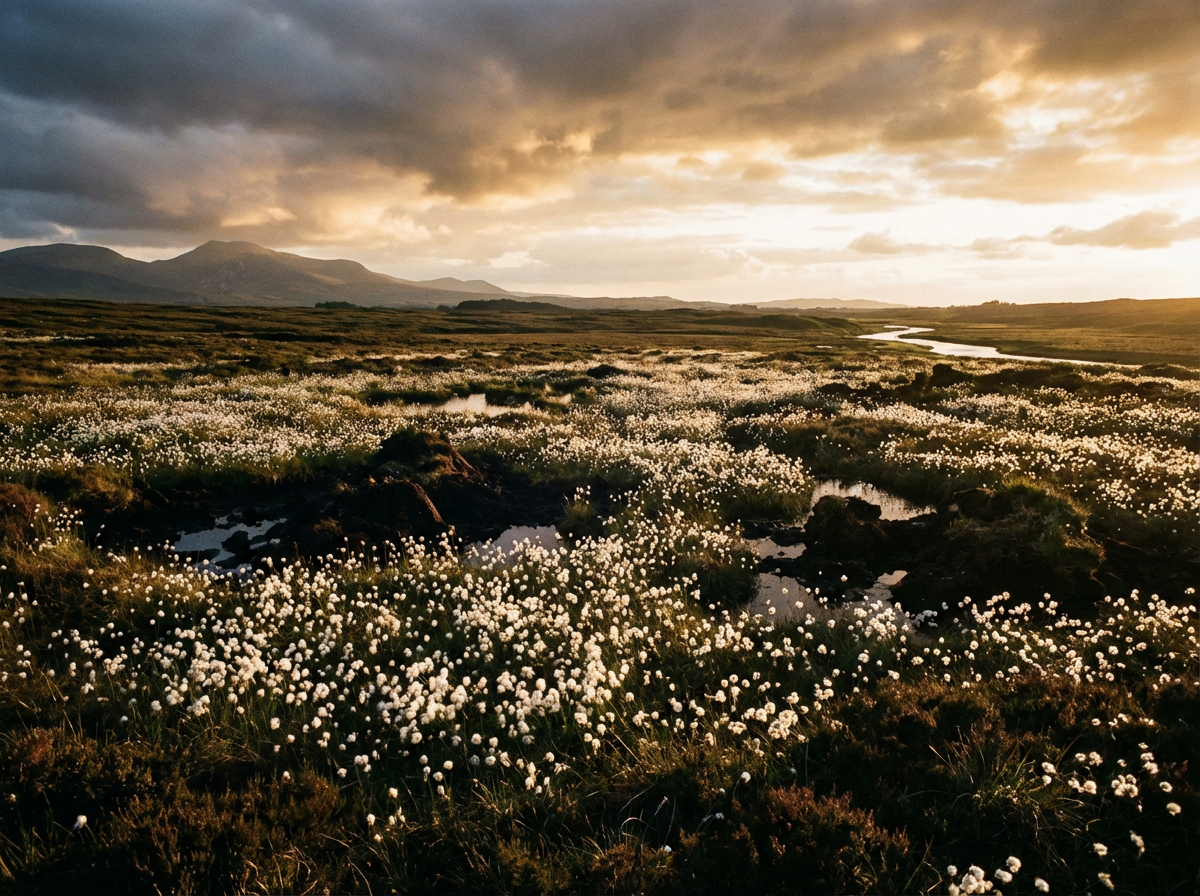
I'm not actually cotton at all — I'm a sedge, a member of the Cyperaceae family. But when my fluffy white seedheads catch the wind and dance across the bog in waves, you'll understand why people call me cotton.
I thrive where few other plants can: in the acidic, waterlogged soils of Irish bogs and wet heaths. From May through July, I transform from inconspicuous green shoots into clouds of white fluff that make the landscape look like it's been dusted with snow.
My Irish name, Ceannbhán Móna, means "white head of the bog" — and that's exactly what I am. Where you see me, you know you're standing on ancient peatland, a rare and precious ecosystem.
My Home: The Irish Bog
Irish bogs are magical places — ancient, mysterious, and teeming with specialized life. I'm an indicator species: where I grow in abundance, the bog is healthy. I need clean water, low nutrients, and acidic conditions to thrive.
Bogs are carbon sinks, storing thousands of years of plant material as peat. They're also biodiversity hotspots, home to rare plants, insects, and birds. When you see me waving in the wind, you're looking at a functioning, living ecosystem that's been here for millennia.
Sadly, many Irish bogs have been drained or harvested for peat. Conservation efforts are working to protect what remains. Every patch of bog cotton is a reminder of what we stand to lose — and what we must protect.
Folklore & Traditional Uses
Historically, people collected my fluffy seedheads for practical purposes: stuffing pillows, making wicks for candles and lamps, and even dressing wounds (my fibers are naturally absorbent and antiseptic).
In folklore, I'm associated with the fairy folk and the otherworld. Bogs were seen as liminal spaces — neither land nor water, neither here nor there. To walk among the bog cotton was to walk between worlds.
From Bog to Jewellery
Collecting bog cotton is an adventure. I have to venture out to remote bogs, often accessible only by foot across uneven, waterlogged ground. But the sight of thousands of white seedheads dancing in the breeze makes every step worth it.
I collect only a small amount, leaving the vast majority for seed dispersal and wildlife. Each fluffy head is carefully dried and preserved, maintaining its delicate structure.
When encased in resin, bog cotton becomes a tiny piece of the Irish bog you can carry with you — a reminder of wild places, ancient landscapes, and the importance of conservation.
Conservation & Ethical Foraging
Irish bogs are protected habitats. I only collect bog cotton from areas where it's abundant and legal to do so, taking tiny amounts that won't impact the ecosystem. Never harvest from designated nature reserves or protected sites.
If you'd like to see bog cotton in the wild, visit during late spring/early summer. Stay on marked paths to avoid damaging the fragile bog ecosystem. Look, photograph, appreciate — but leave the plants for others to enjoy.