Cow Parsley
Irish Name: Peirsil Bhó
Botanical Name: Anthriscus sylvestris
My Story
"I am cow parsley, the frothy white foam that lines every Irish lane in spring — and I turn the hedgerows into lace."
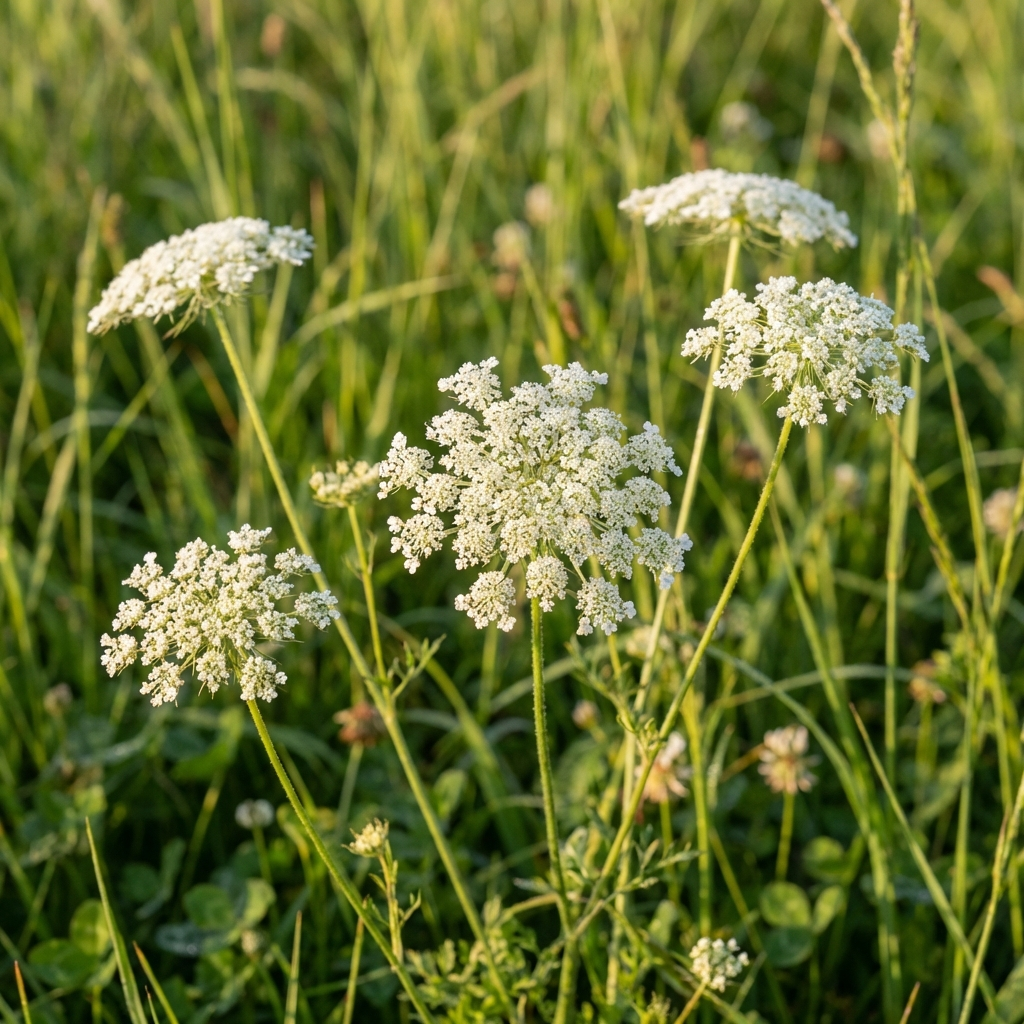
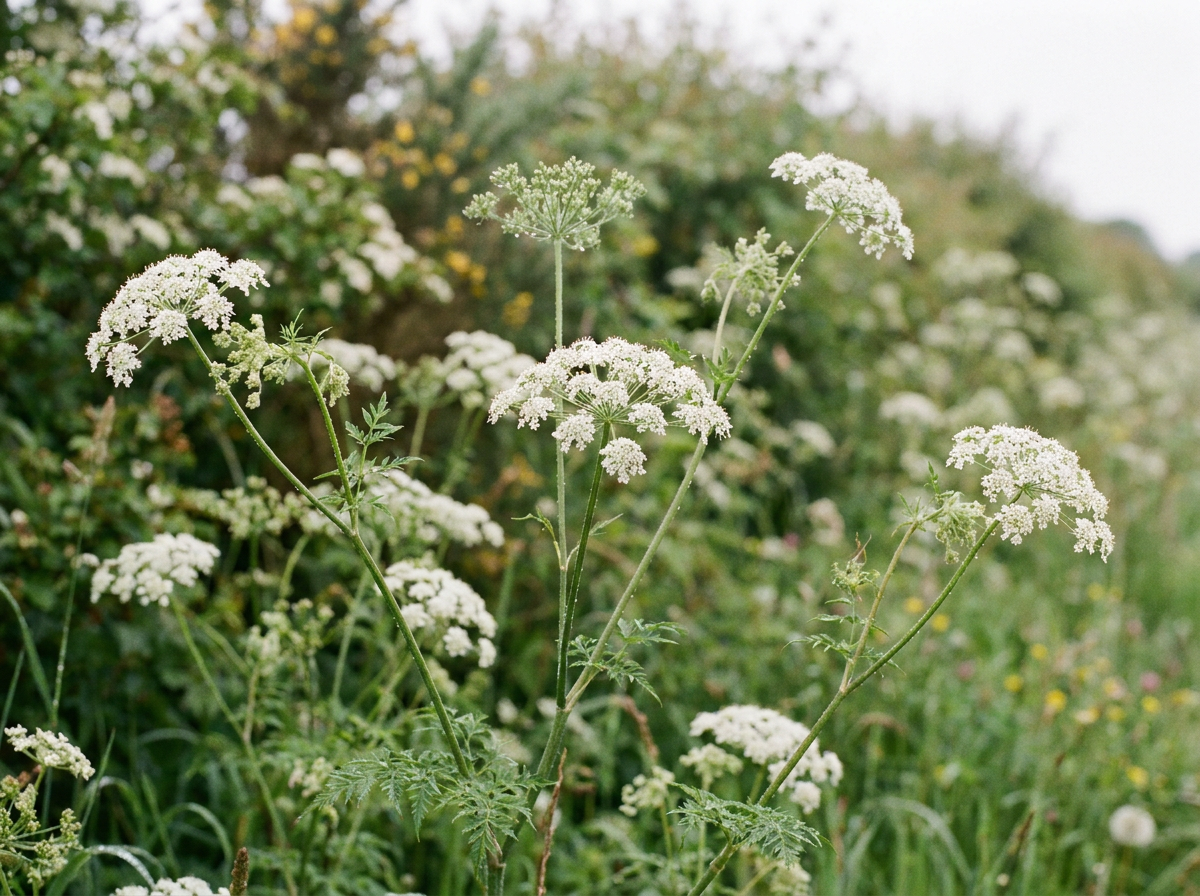
When I bloom, the Irish countryside transforms. Suddenly, every hedgerow, every lane, every field margin is frothing with my white flower heads, creating a lace-like canopy that sways in the breeze. I'm the signature flower of late spring — the one that tells you summer is just around the corner.
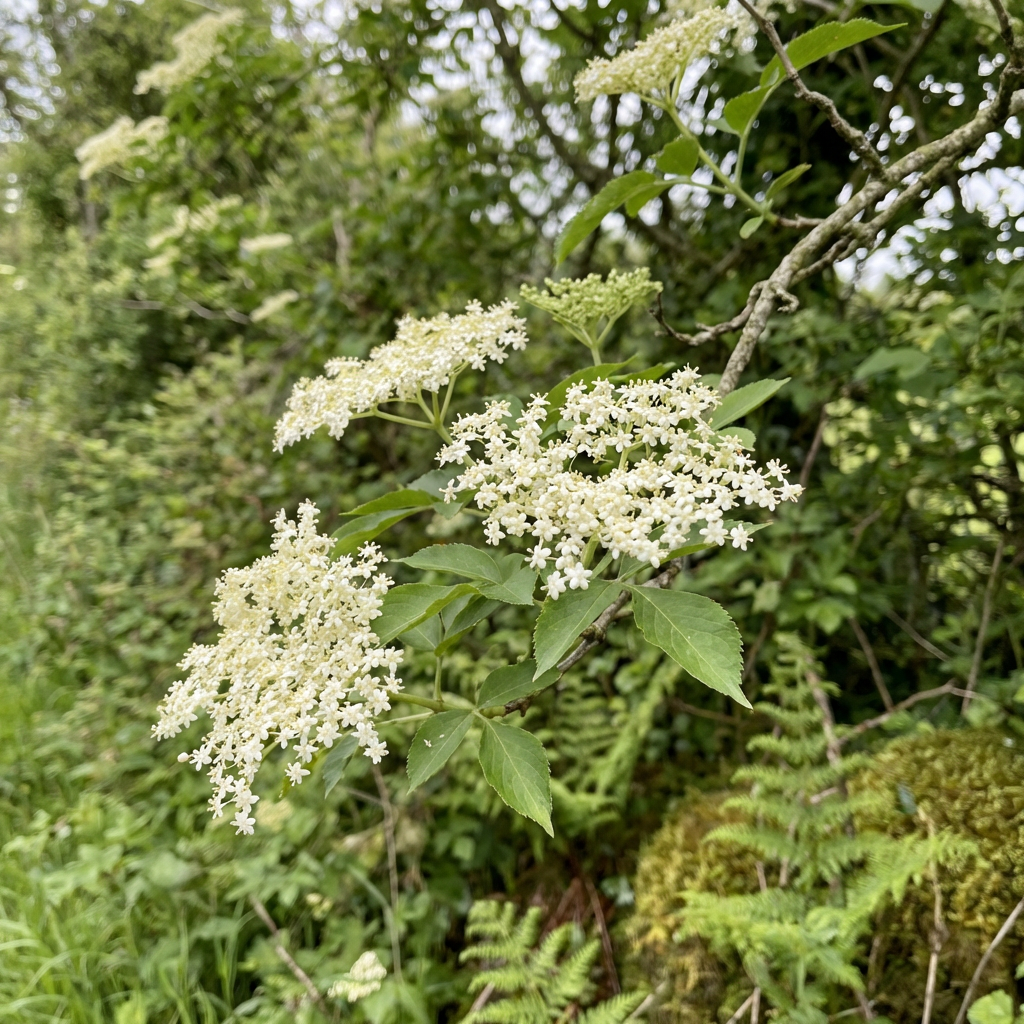
I grow tall — sometimes over a metre high — with hollow, grooved stems and feathery, fern-like leaves. My flower heads are flat-topped umbels, each one a cluster of tiny white flowers that together create a cloud-like effect. When the wind catches a hedgerow full of cow parsley, it looks like white waves rolling along the roadside.
I'm sometimes called "Queen Anne's Lace" (though that name is more properly given to wild carrot). Other folk names include "mother-die" and "devil's parsley" — hints that I was once viewed with some suspicion, perhaps because of my resemblance to poisonous relatives.
My Home: Irish Hedgerows & Lanes
I love the edges — hedgerow bases, roadside verges, woodland margins, and the banks of streams. I thrive in rich, moist soil and partial shade, though I'll grow in full sun too. I'm one of the first umbellifers to bloom each year, appearing weeks before my relatives like hogweed and wild carrot.
My flowers are a feast for insects. Hoverflies, beetles, small wasps, and flies swarm to my flat flower heads, which act like landing platforms. I'm particularly important for hoverflies, whose larvae are voracious aphid-eaters — so by feeding the hoverflies, I'm helping gardeners everywhere.
After flowering, my seeds provide food for finches and other small birds. A hedgerow rich in cow parsley is a hedgerow rich in life.
Folklore & Caution
Cow parsley has a complicated reputation in folklore. While it's harmless and even edible (the young leaves were once eaten as a pot herb), it looks very similar to some dangerous plants — including hemlock and fool's parsley. This resemblance earned it some ominous folk names.
In some Irish traditions, bringing cow parsley indoors was considered unlucky — perhaps a practical warning to avoid confusion with its poisonous lookalikes. The name "mother-die" reflects this superstition.
Despite these warnings, cow parsley has always been appreciated for its beauty. It's the flower that makes Irish lanes look like something from a storybook — white and wild and wonderfully romantic.
From Lane to Jewellery
Cow parsley flowers are exquisitely delicate in resin. Each tiny floret maintains its structure when carefully dried, creating intricate white patterns that look like miniature lace doilies — nature's own lacework.
I collect cow parsley during its peak bloom in late spring, choosing fresh flower heads that are fully open. The flowers are pressed and dried carefully to preserve their delicate, airy structure.
Set in crystal-clear resin, cow parsley becomes a tiny piece of an Irish country lane — white lace against clear glass, a reminder of hedgerow walks and the sweet, green scent of spring.
Ethical Foraging Note
Cow parsley is extremely abundant in Ireland — it grows in vast quantities along every hedgerow and lane. I collect only from large populations, taking a few flower heads and leaving the rest for pollinators.
Important: Cow parsley can look similar to hemlock and other poisonous umbellifers. Never forage unless you are confident in identification. Cow parsley has grooved (not spotted) stems and a mild, pleasant smell when crushed.