Herb Robert
Irish Name: Ruithéal Rí
Botanical Name: Geranium robertianum
My Story
"I am Herb Robert, the little pink geranium that grows in every crack and corner — and I've been a friend to herbalists for centuries."
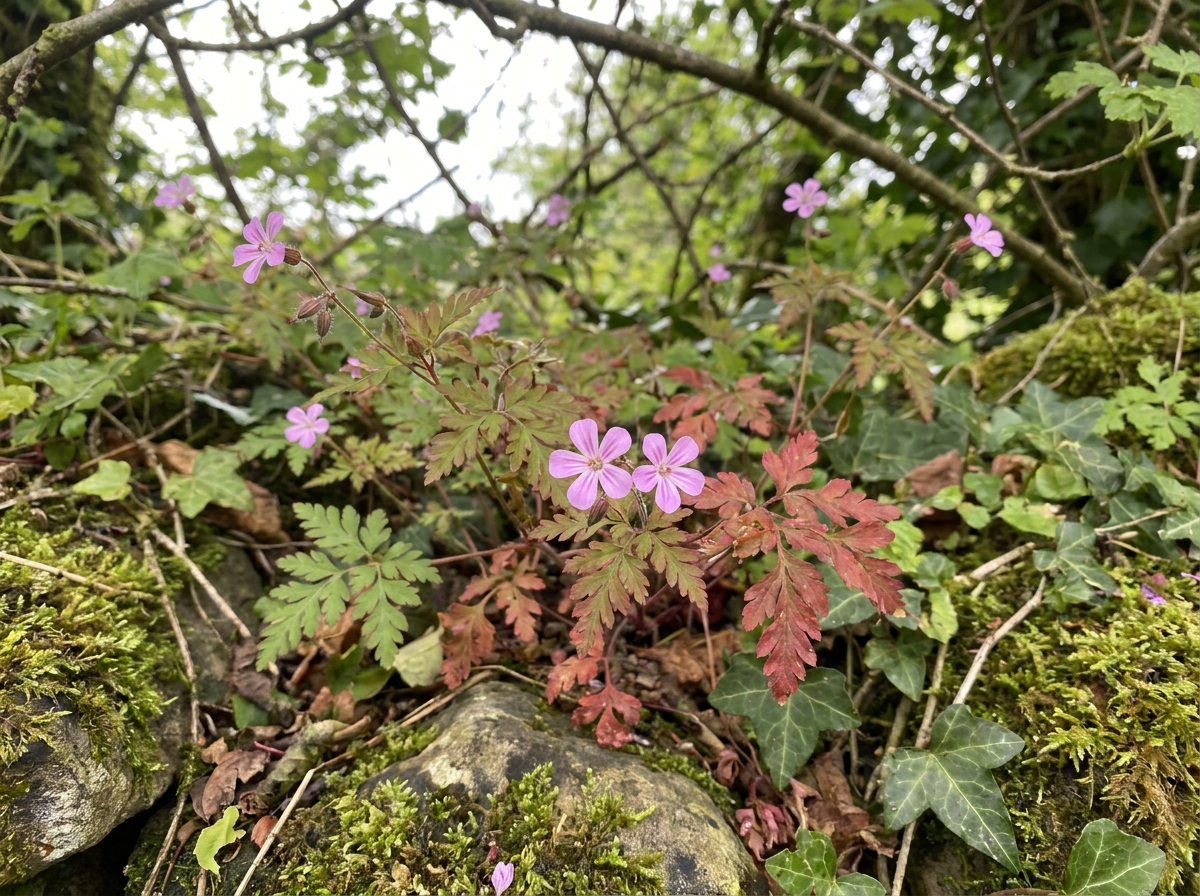
I'm one of the most common yet most overlooked wildflowers in Ireland. My small, bright pink flowers with their delicate veined petals bloom from spring right through to late autumn — one of the longest flowering seasons of any Irish wildflower. While others come and go, I keep blooming.
My deeply divided, fern-like leaves are one of my most distinctive features. In autumn, they turn a brilliant red — sometimes the whole plant glows crimson, adding unexpected colour to walls and hedgerows when most other plants are fading.
Who was Robert? Nobody knows for certain. Some say I'm named after St. Robert of Molesme, others after Robin Goodfellow (the fairy Puck). My Irish name, Ruithéal Rí, means "the king's plant" — suggesting I was once held in high regard.
My Home: Walls, Cracks & Hedgerows
I grow almost anywhere — in cracks in old walls, at the base of hedgerows, in woodland clearings, on rocky banks, and in gardens. I'm not fussy about soil or light, though I prefer some shade and moisture. You'll find me in every county in Ireland.
My flowers are small but perfectly formed — five pink petals with darker veins that guide pollinators to the nectar. I'm visited by hoverflies, small bees, and beetles. After flowering, I produce distinctive long, beak-like seed pods that give my family its other common name: cranesbill.
I have a distinctive smell — some people love it, others find it pungent. Crush one of my leaves and you'll know what I mean. That scent is actually a natural insect repellent, and it's one of the reasons I've been used in folk medicine for centuries.
Folklore & Traditional Uses
Herb Robert has a long history in folk medicine across Europe. It was used as a poultice for wounds, a remedy for toothache, and a treatment for nosebleeds. The crushed leaves were rubbed on skin to repel mosquitoes — a use that modern science has actually confirmed.
In Irish folklore, the plant was associated with protection. Growing near a doorway, it was believed to ward off evil spirits. Its red autumn colour was seen as a sign of its protective power — the colour of fire and strength.
The plant's association with Robin Goodfellow connects it to fairy lore. In some traditions, it was considered a fairy plant — one that should be treated with respect and never carelessly destroyed.
From Hedgerow to Jewellery
Herb Robert's small pink flowers are delightfully delicate in resin. The five petals with their fine veining create a subtle, elegant look — like tiny pink stars. The flowers are small enough to work beautifully in earrings and rings as well as pendants.
I collect Herb Robert flowers throughout its long blooming season, choosing freshly opened flowers with bright, unblemished petals. Each one is carefully pressed and dried to preserve the delicate pink colour and fine veining.
Set in crystal-clear resin, Herb Robert becomes a tiny reminder of Irish hedgerows and stone walls — those quiet, overlooked places where beauty grows in every crack.
Ethical Foraging Note
Herb Robert is one of the most abundant wildflowers in Ireland — it grows everywhere and self-seeds prolifically. I collect only a few flowers from large populations, but this is a plant that genuinely thrives no matter how much you pick. Still, I always forage with gratitude and leave plenty for the pollinators.