Maidenhair Spleenwort
Irish Name: Lus na Seilge
Botanical Name: Asplenium trichomanes
My Story
"I am the maidenhair spleenwort, the tiny fern that turns stone walls into gardens."
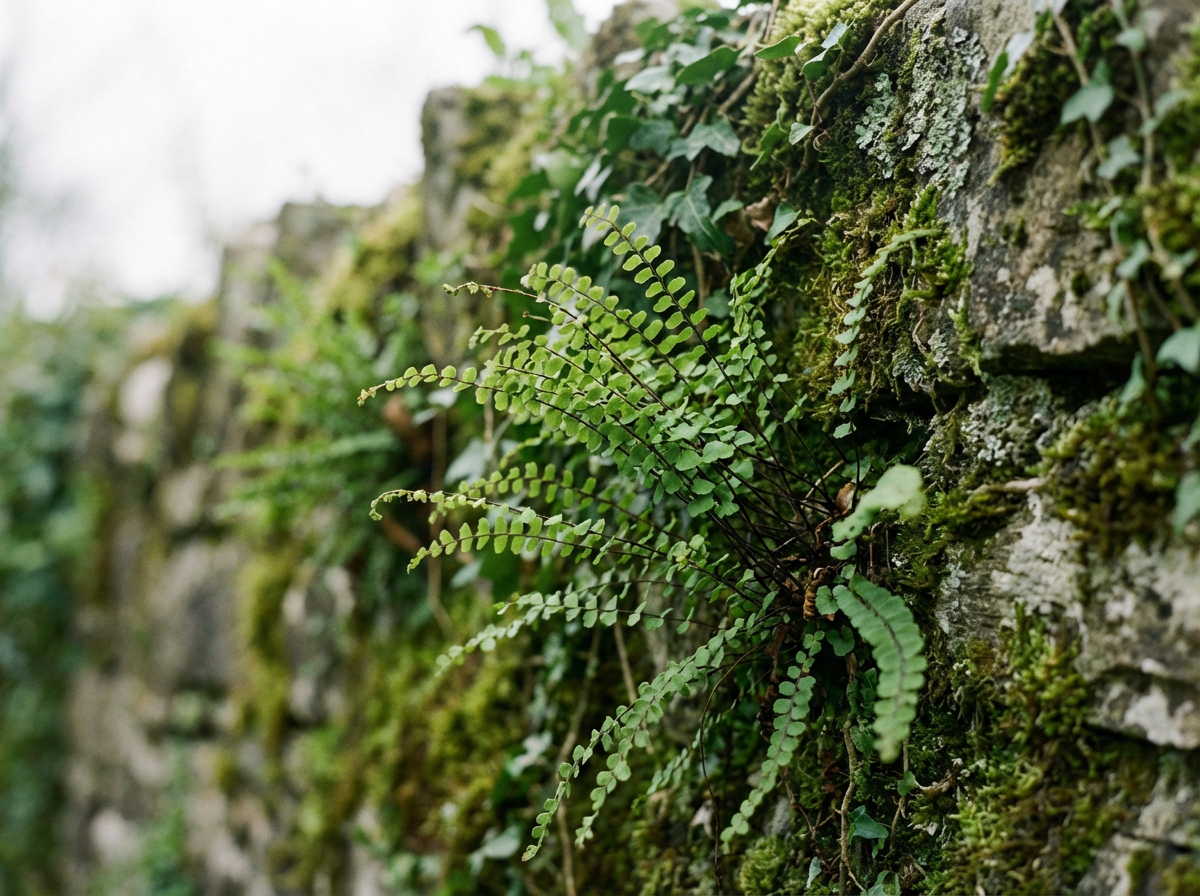
Look closely at any old stone wall in Ireland — the crumbling ruins of an abbey, the mossy boundary walls of ancient fields, the rocky crevices of a limestone quarry — and you'll find me. I'm small, rarely more than a hand's length, but I'm everywhere once you learn to see me.
My fronds are my pride: a row of tiny, rounded leaflets arranged like little green coins along a dark, wiry stem that's almost black. That contrast — bright green against jet-black — is my signature. It's what makes people stop and look twice at an otherwise ordinary wall.
My botanical name, Asplenium trichomanes, hints at my delicate nature.Trichomanes comes from the Greek for "hair-like" — a nod to my slender, dark stems that look like fine threads of hair. And "spleenwort"? That's from the old belief that I could cure ailments of the spleen. I can't, of course, but I appreciate the thought.
My Home: Walls, Rocks & Ruins
I'm a lithophyte — a plant that grows on rocks and stone. While most plants need soil, I've mastered the art of living in cracks and crevices, drawing moisture and nutrients from the thinnest film of grit between stones. Old walls, rocky outcrops, bridge arches, and ruins are my favourite places.
In Ireland, I'm particularly fond of limestone. The alkaline conditions suit me perfectly, and you'll find me in abundance on the stone walls of the Burren, in old quarries, and on the walls of medieval churches and castles. I love the sheltered, slightly damp conditions that north-facing walls provide.
I'm evergreen — while the wildflowers around me fade in autumn, I stay green all year round. In winter, when the walls are bare and grey, my little fronds are a quiet reminder that life persists, even in the coldest months. I'm a symbol of resilience, of finding beauty in unlikely places.
Folklore & Traditional Uses
In medieval herbalism, spleenworts were believed to cure diseases of the spleen — a classic example of the "Doctrine of Signatures," where a plant's appearance was thought to indicate its medicinal use. My spleen-shaped leaflets gave me my name and my supposed healing power.
Ferns in general hold a special place in Irish and Celtic folklore. Because we don't flower or produce seeds in the usual way (we reproduce through spores), people once believed fern "seeds" were invisible — and that carrying them could make you invisible too. On Midsummer's Eve, brave souls would venture out to collect fern seed, hoping for the gift of invisibility or the ability to find hidden treasure.
In Irish tradition, ferns growing on old walls and ruins were seen as guardians of ancient places. They were the green keepers of memory, softening the hard edges of time and reminding people that nature always reclaims what was once hers.
From Wall to Jewellery
Maidenhair spleenwort is exquisitely beautiful in resin. The tiny round leaflets maintain their vivid green colour when carefully dried, and the dark, wiry stems create a striking contrast that looks almost like delicate calligraphy.
I collect only small fronds from walls where the fern grows in abundance, always leaving the rootstock intact so it continues to thrive. Each frond is carefully pressed and dried to preserve the beautiful arrangement of its coin-like leaflets.
Set in crystal-clear resin, a maidenhair spleenwort frond becomes a tiny piece of Ireland's ancient stone walls — a reminder of quiet ruins, mossy corners, and the resilience of nature finding a home in the most unexpected places. It's one of my favourite botanicals to work with because of its unique, architectural beauty.
Ethical Foraging Note
Maidenhair spleenwort is common across Ireland, growing on walls and rocks throughout the country. I only take a few small fronds from large, healthy colonies, never disturbing the rootstock. The plant continues to grow and produce new fronds throughout the year.
Please don't pull ferns from old walls or ruins — the roots help hold the stonework together, and removing them can damage both the plant and the structure. If you'd like to admire maidenhair spleenwort, look for it on any old stone wall on your next walk. Once you know what to look for, you'll see it everywhere.