Meadow Buttercup
Irish Name: Fearbán Féir
Botanical Name: Ranunculus acris
My Story
"I am the buttercup, the golden coin of Irish meadows."
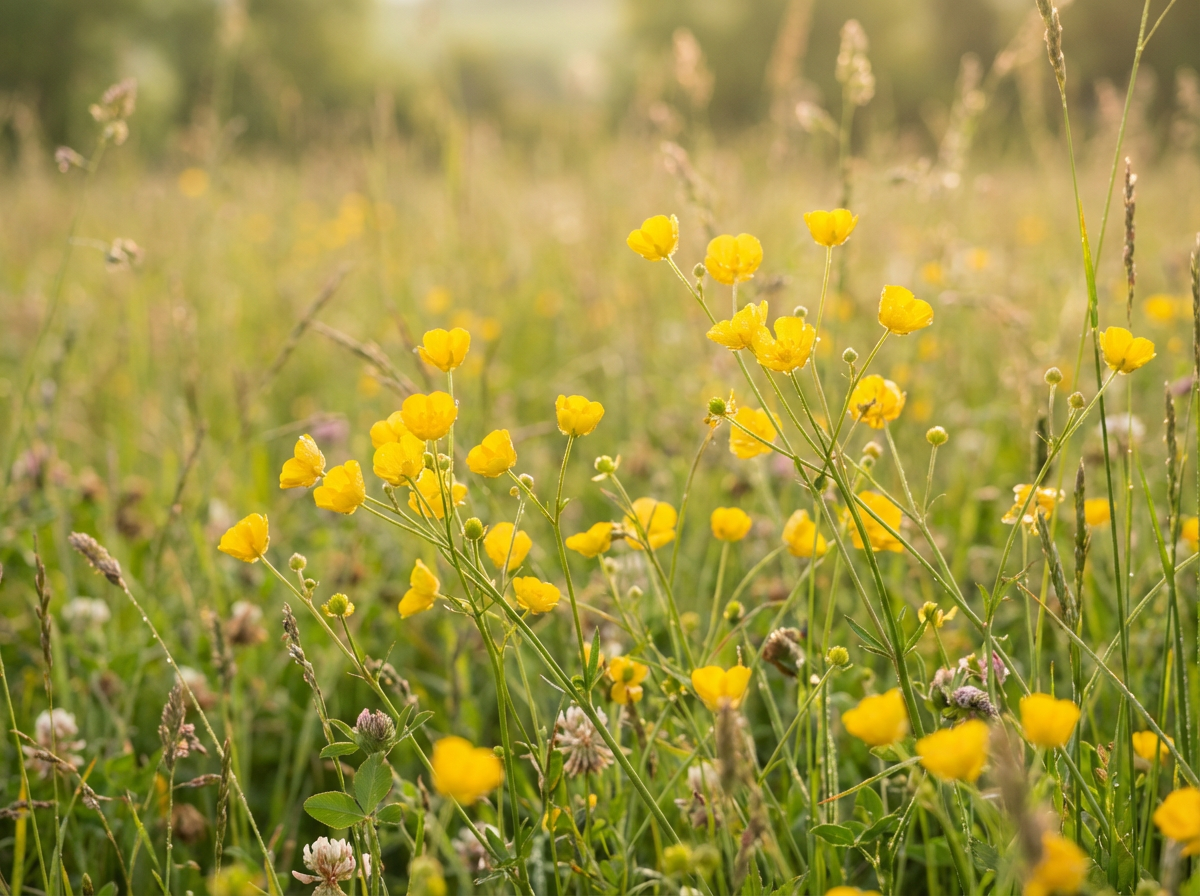
Hold me under your chin on a summer's day. See that golden glow reflected on your skin? That means you like butter — or so the old game goes. The truth is, my petals are so glossy and reflective that they bounce light like tiny mirrors. It's my special trick, and it's been delighting children for generations.
I'm the flower that turns whole meadows gold in early summer. When the sun hits a field of buttercups, it's like the earth is glowing from within. I stand tall on slender stems, my five bright petals catching every ray of light, and I sway in the breeze like I'm dancing.
My botanical name, Ranunculus, comes from the Latin for "little frog" — because, like frogs, I love damp meadows. And acris means "sharp" or "acrid," a hint that I'm not as sweet as I look. My sap is mildly toxic, which is why cattle leave me alone and I thrive in grazed pastures.
My Home: Golden Meadows
I thrive in damp, fertile meadows and pastures across Ireland. You'll find me in hay meadows, along field margins, in parks, and on riverbanks. I prefer slightly acidic to neutral soils and I love moisture — the damper the meadow, the happier I am.
My glossy petals aren't just beautiful — they're functional. The mirror-like surface reflects UV light in a pattern that's irresistible to pollinators. Bees, hoverflies, and beetles all visit me, drawn by both my colour and my nectar. Scientists have discovered that my petals have a unique layered structure that creates this intense reflectiveness — I'm literally one of the shiniest flowers in nature.
In a healthy, traditional Irish meadow, I'm one of the most abundant flowers. My presence indicates good soil, proper moisture, and a balanced ecosystem. Where buttercups thrive, the land is well.
Folklore & Traditions
The "do you like butter?" game is perhaps the most universal piece of flower folklore in the British Isles. Every child in Ireland has held a buttercup under a friend's chin to see the golden reflection. It's a simple, joyful tradition that connects generations.
In older Irish folklore, buttercups were associated with the fairy folk. Fields of gold were said to be places where the fairies danced, and picking too many buttercups might anger them. Some believed that rubbing buttercup petals on a cow's udder on May Day would ensure good butter production for the year.
Despite their beauty, buttercups were also respected for their power. The acrid sap could blister skin, and herbalists knew to handle them carefully. In folk medicine, they were used externally (never internally) for various remedies — a reminder that beauty and strength often go hand in hand.
From Meadow to Jewellery
Buttercups bring a burst of sunshine to resin jewellery. Their bright golden colour is remarkably well-preserved when dried carefully, and their glossy petals maintain a beautiful sheen even in resin.
I collect buttercups from abundant meadows during their peak bloom in late spring and early summer. Each flower is selected for its colour intensity and petal quality, then pressed and dried slowly to maintain that signature golden glow.
Set in crystal-clear resin, a buttercup becomes a tiny piece of summer you can carry with you all year round. The golden petals catch the light beautifully, creating a warm, joyful piece that reminds you of meadows, sunshine, and childhood games.
Ethical Foraging Note
Buttercups are very common across Ireland, growing in abundance in meadows and grasslands. I collect only from large populations, taking a small number and leaving the vast majority for pollinators and seed production.
Note: Buttercup sap can irritate skin, so I always handle them with care during collection. Once dried and preserved in resin, they're perfectly safe to wear.